19+ Dog Door Ideas That Make Everyday Life Easier

Getting up every time your dog wants to go in or out can quickly turn into a daily interruption.
Most homes are not designed with easy pet access in mind, and standard dog doors often feel too basic, bulky, or not secure enough. It can be hard to find something that actually fits your space without affecting the overall look of your home.
The good news is, there are smarter and more creative ways to add a dog door without compromising style or functionality.
In this article, we will explore 19+ creative dog door ideas that make life easier for both you and your dog, while still fitting naturally into your home.
Let’s jump into it!
Why A Dog Door Can Be More Than Just Practical?
Many people think of dog doors as simple cut-outs that serve one purpose.
But with a bit of creativity, they can be designed to blend into doors, walls, or even furniture without standing out.
Most pet owners want something that feels convenient, secure, and visually clean at the same time.
That can be achieved with options like hidden panels, sliding inserts, wall-mounted designs, or custom-built solutions that match your home’s style.
It is not just about giving your dog access; it is about doing it in a way that feels intentional and well-designed.
Quick Checklist Before You Install a Dog Door
Go through this slowly. Each point solves a problem people usually notice too late.
- Plan for night and security control
You will need a way to close or lock it sometimes.
Not thinking about this early becomes annoying later. - Measure your dog the right way
Measure from floor to shoulders, not head. Add 1–2 inches for comfort.
If it’s too tight, your dog will hesitate or avoid using it. - Check how thick your door or wall is
Some dog doors are made for thin doors only.
If the tunnel is too short, you’ll get gaps, drafts, or weak fitting. - Look at what’s directly outside
Is it mud, grass, concrete, or a slope?
Mud + dog door = daily cleaning problem if you don’t plan for it. - Watch where your dog already waits
Dogs usually pick one “exit spot” in the house.
Installing the door somewhere else creates confusion and slow adoption. - Think about wind direction and rain
If rain hits that side of the house, water will come inside.
A flap alone won’t fully stop it. - Check how often the door will be used
High-use doors need stronger hinges, better seals, and smoother flaps.
Cheap ones wear out fast with daily use.
Simple DIY Cut Out Approach
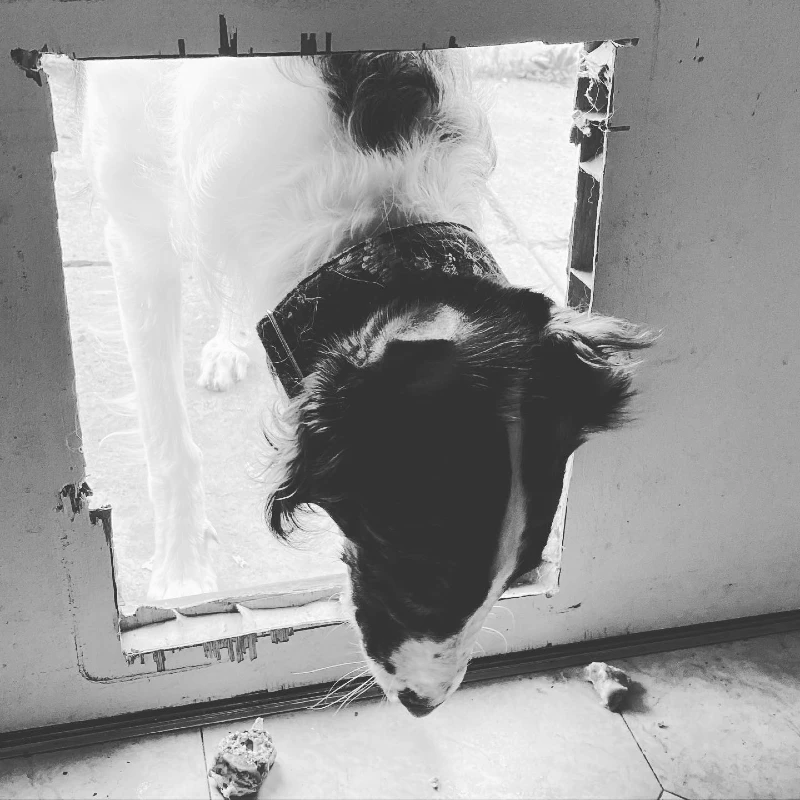
This image captures a raw and honest DIY moment where a simple rectangular opening has been hand-cut into a solid white door. You can see the textured edges of the wood and the curious face of a black and white pup peering through the unfinished frame.
The design works because it prioritizes immediate function and shows the beginning stages of a home project tailored specifically for a pet’s size. It feels authentic and lived-in as if the homeowner decided that their dog’s happiness was worth more than a pristine door panel.
There is a sense of eager anticipation and backyard adventure in this shot. You can almost feel the cool breeze coming through the opening as the dog prepares to hop outside for a morning run.
If you are trying this yourself, be sure to sand down those rough edges thoroughly to keep paws and fur safe from splinters.
Flexible Flap for Weather Protection
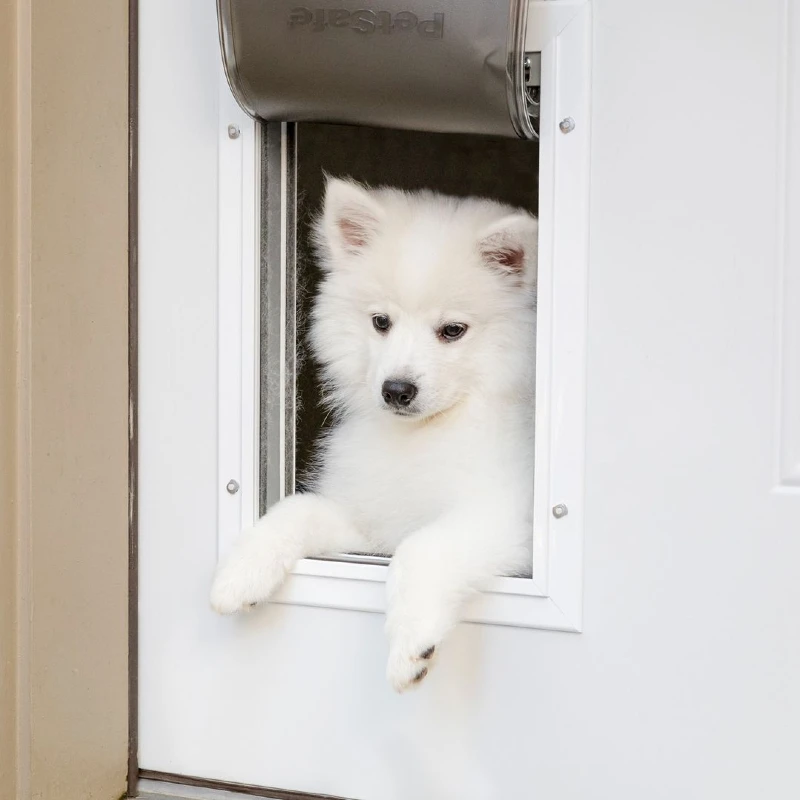
A pristine white door features a high-quality pet door insert with a thick grey flexible flap held open by a fluffy white puppy. The frame is clean and modern with visible silver screws that ensure a tight and secure fit against the door’s surface.
Visually, this works because the white-on-white palette keeps the addition looking intentional and tidy rather than cluttered. The heavy-duty flap is designed to snap back into place, which helps keep the temperature inside your home perfectly regulated.
The mood here is incredibly sweet and gentle, showcasing a soft moment of a puppy discovering its new independence. It feels organized and safe, providing a reliable barrier against the elements while still being easy for a small dog to push.
Look for flaps with magnetic bottom strips to ensure they stay closed even when the wind picks up.
Elegant Glass Panel Octagon Insert
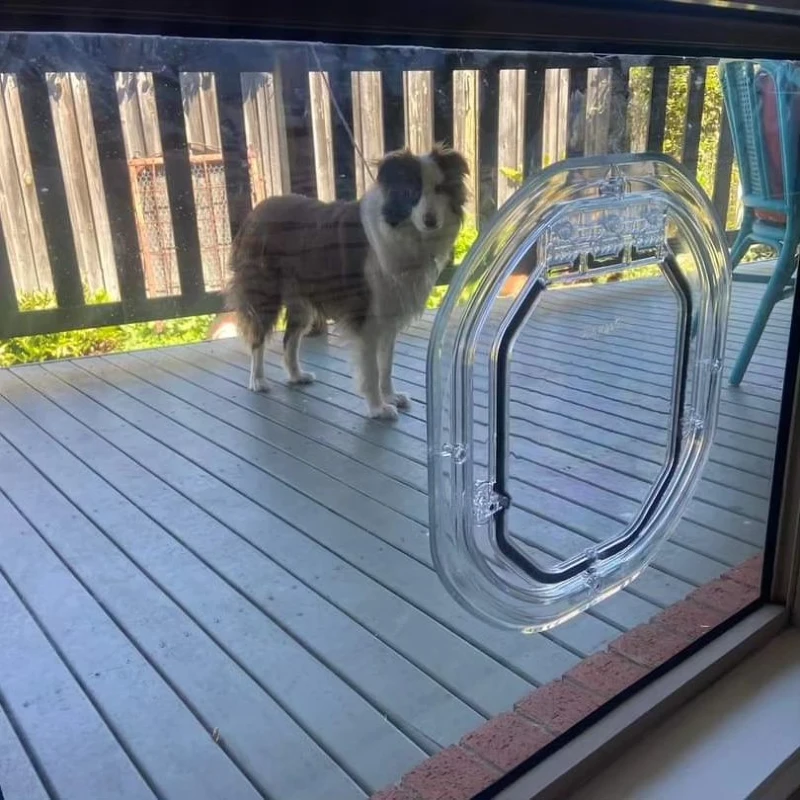
This sophisticated setup shows a clear octagonal pet door built directly into a large glass pane overlooking a wooden deck. The transparent material of the pet door allows the beauty of the outdoor scenery to remain completely unobstructed for the humans inside.
The geometric shape of the insert adds a touch of modern flair and feels much more like a design choice than a utility item. Because it is made of safety glass, it blends seamlessly with the existing window, making the pet’s exit point almost invisible from a distance.
The energy of this space is bright and airy, emphasizing a seamless connection between the cozy indoors and the sunny backyard. It creates a feeling of luxury and thoughtfulness where the pet’s needs are integrated into the architecture of the home.
Professional installation is usually a must for glass inserts to ensure the structural integrity of your sliding door remains intact.
Large Clear Panel for Big Pups
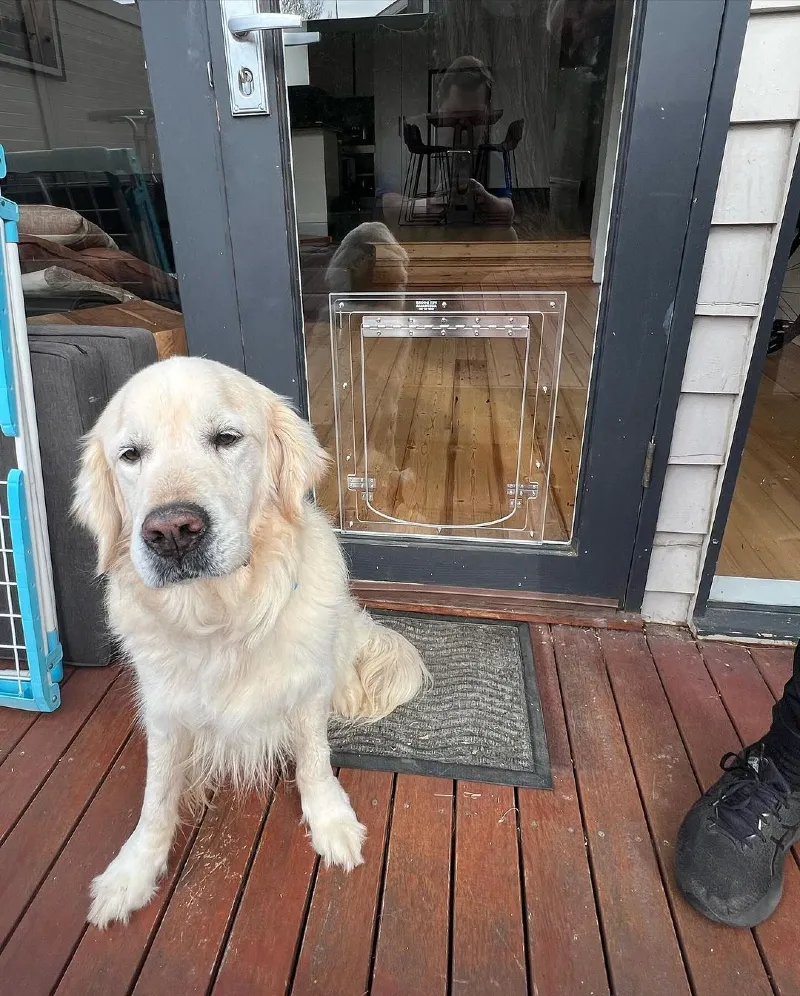
A stunning Golden Retriever sits patiently next to a substantial, clear pet door that has been installed into a dark-framed glass door. The pet door features a sturdy top hinge and a transparent flap that matches the scale of the large breed dog.
This design is highly effective because it manages to accommodate a big animal without feeling bulky or heavy in the room. The use of clear materials allows the natural wood flooring and the outdoor deck to visually merge, which keeps the entryway feeling spacious.
There is a wonderful sense of calm and loyalty in this image. The dog looks proud of its new door, and the overall vibe is one of a well-organized and happy household.
For larger dogs, ensure the “step-over” height is low enough that they don’t have to jump or struggle as they age.
Aluminum Frame Sliding Door Solution
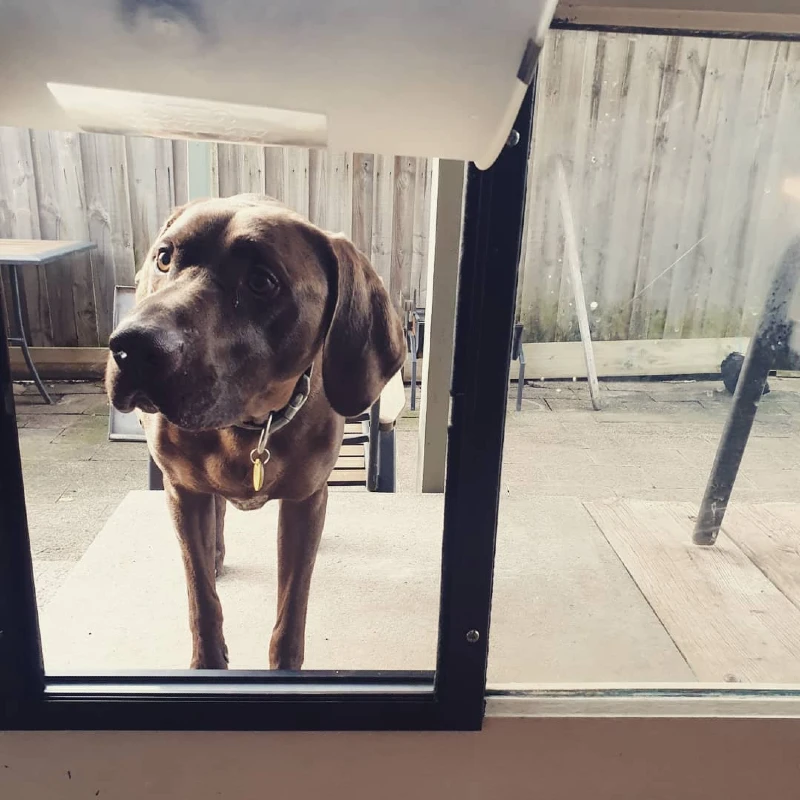
In this scene, a chocolate-colored dog looks through a pet door that is part of a black aluminum frame insert in a sliding glass door. The dark metal frame provides a bold contrast against the glass and coordinates perfectly with modern industrial or contemporary home styles.
The vertical orientation of the insert allows it to fit into the track of a sliding door without requiring any permanent alterations to the house. It is a brilliant visual solution for renters or anyone who wants a sturdy exit that can be removed later if needed.
The mood is watchful and focused, capturing that classic “can I go out yet” expression that every dog owner knows. It feels sturdy and reliable, offering a permanent-looking solution that is actually quite flexible.
These inserts are great because they often come with their own locking systems to keep your home secure at night.
Circular Clear Locking Pet Door
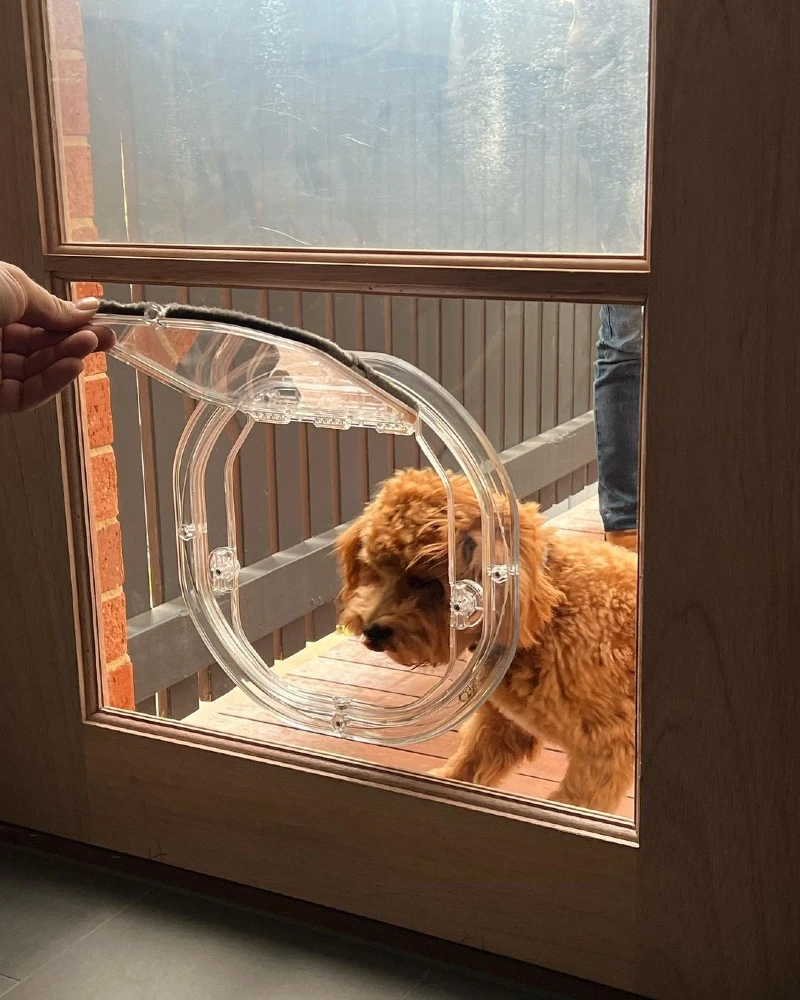
A hand is shown lifting the flap of a unique circular clear pet door that is mounted into a glass window panel. Inside the house, a fluffy brown doodle waits to see if the path is clear to head out onto the wooden balcony.
The circular design is a refreshing departure from standard squares and circles, echoing the look of a porthole. It looks incredibly chic and high-end, especially with the visible locking knobs that allow the owner to control access with a simple turn.
The energy is playful and interactive, highlighting the bond between the owner and the pet during the training process. It creates an atmosphere of curiosity and modern living where even the smallest details are treated with style.
Circular doors are often easier to clean than those with sharp corners, where dust tends to collect over time.
Decorative Mat and Clear Flap Combo

Two adorable Spaniels in cozy sweaters sit on a deck in front of a clear pet door that reveals a “Life is better with a dog” mat inside. The transparent flap is hinged at the top and framed with slim hardware that keeps the focus on the pups and the decor.
This setup works visually by layering textures from the wooden deck to the woven mat and the soft knitwear of the dogs. It proves that a pet entrance can be a focal point for a very cute and welcoming “mudroom” style area.
The feeling here is pure warmth and domestic bliss. It feels like a chilly morning made better by cozy layers and the ease of a quick trip outside.
Adding a mat both inside and outside the dog door is a total game-changer for catching muddy paw prints before they hit your rugs.
Common Mistakes That Turn a Good Idea Into a Daily Hassle
These don’t show up on day one. They show up after real use.
Installing it in the “best looking spot” instead of the right spot
Looks clean, but your dog keeps going to the old door and gets confused.
Ignoring dirt flow
Dogs don’t stop to clean their paws.
If the door opens directly onto soil or grass, dirt comes in every time.
Choosing a flap that’s too stiff or too light
Too stiff → dog refuses to use it
Too light → wind keeps opening it
Making it too big “just in case”
Larger opening = more heat loss, less security, more outside noise
No transition space inside
Without a mat or buffer zone, your floor becomes the transition area
Forgetting aging and long-term use
A door that works for a young dog might be uncomfortable later
(step height, tight entry, heavy flap)
No training plan
Some dogs don’t naturally understand flaps
They need a few guided tries before it feels normal
Polished Wood Frame and Glass Exit
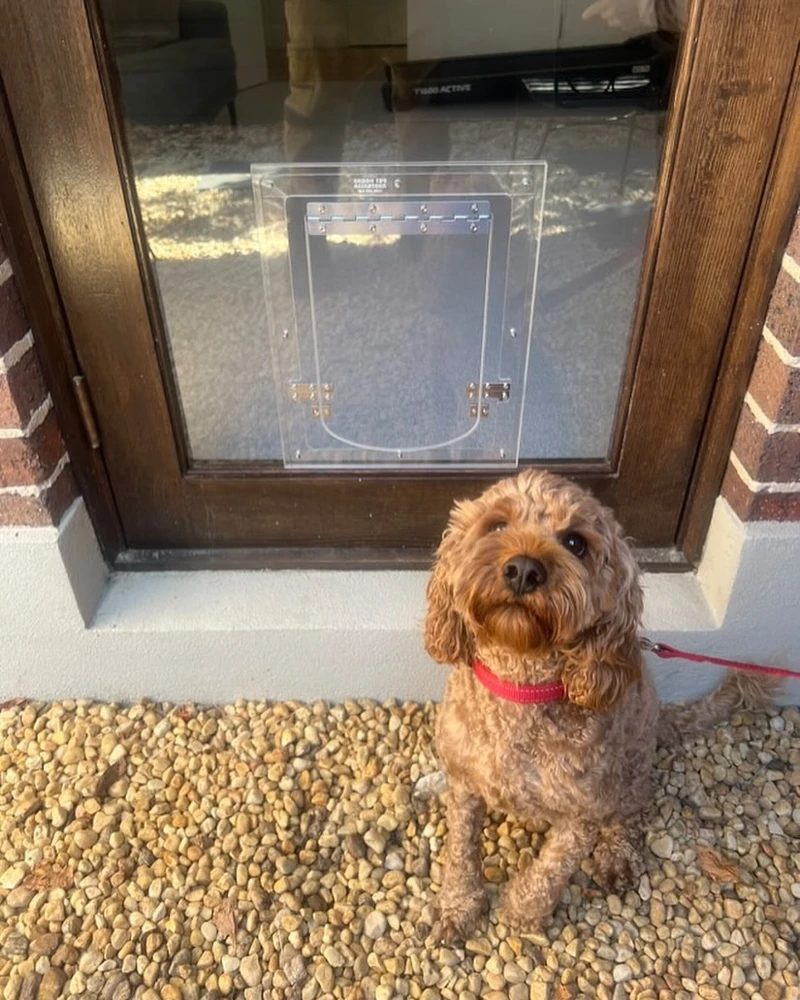
A curly-haired dog sits on a pebble path, looking up at a pet door that has been expertly fitted into a beautiful, dark wood-framed glass door. The clear flap is nearly invisible against the glass behind it, and the hardware is kept to a minimal silver finish.
The rich tones of the wood frame combined with the natural pebbles create a very earthy and grounded aesthetic. This design works because it respects the high-quality materials of the home while still being fully functional for the pet’s daily routine.
The mood is serene and sophisticated. It feels like a quiet moment in a carefully curated home where the pet is a central part of the family’s lifestyle.
When installing into wood frames, make sure the sealant around the pet door is waterproof to prevent any moisture damage to the timber.
Custom Screen Door Integration
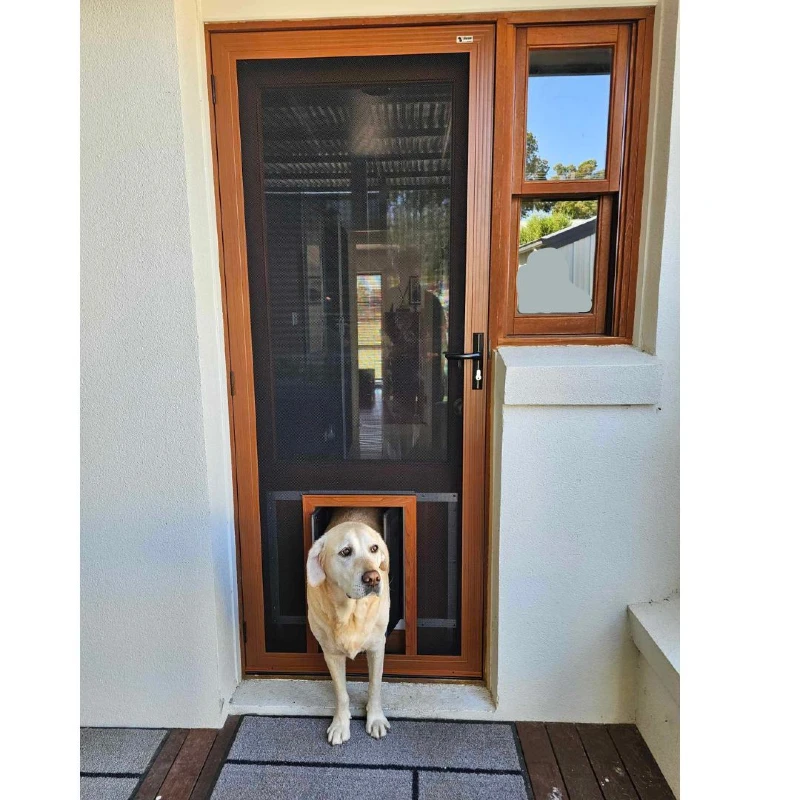
This image shows a large yellow lab exiting through a pet door that has been built into a full-length screen door with a wood-look finish. The screen allows for fresh air to circulate through the house while the pet door provides a dedicated spot for the dog to pass through.
The color coordination between the screen door frame and the dog’s fur creates a very harmonious and balanced visual. It is a practical choice for warmer climates where you want to keep the “big” door open but still need to manage insects and pet movement.
The energy is breezy and relaxed, perfectly capturing a summer afternoon vibe. It feels like the ultimate setup for a dog who loves to drift between the shaded porch and the sunny yard.
Screen door inserts are typically very lightweight, which makes them an excellent choice for older dogs who might find heavy plastic flaps a bit daunting.
Discreet Inset for Luxury Interiors
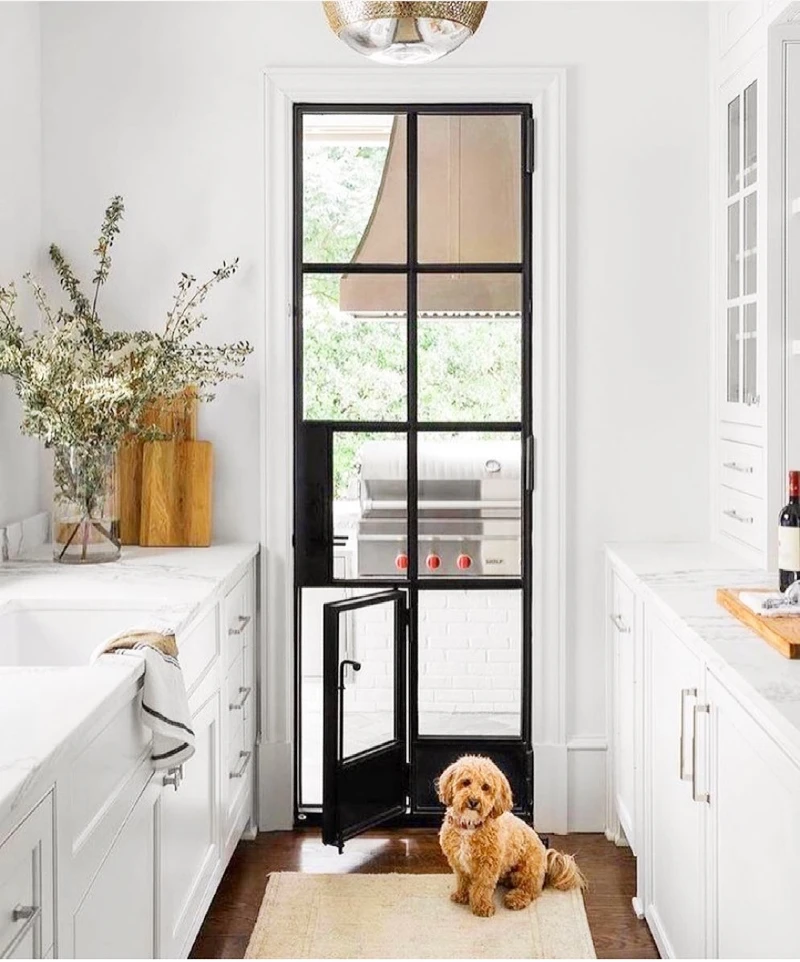
A stunning white kitchen features a black-framed French door with a custom-fitted pet door at the bottom that matches the window panes. A small brown pup sits on a neutral runner rug right in front of the exit, which blends perfectly with the room’s high-end design.
This is the gold standard for aesthetic integration because the dog door follows the exact grid pattern of the larger door. It looks like a deliberate architectural feature rather than an afterthought, which keeps the kitchen looking clean and expensive.
The atmosphere is bright and airy with a touch of “quiet luxury.” It creates a space where the pet’s needs are met without sacrificing a single bit of the home’s beautiful interior design.
Matching the frame color of your dog door to your window mullions is the secret to making it disappear into the room.
Small Secure Peek Through
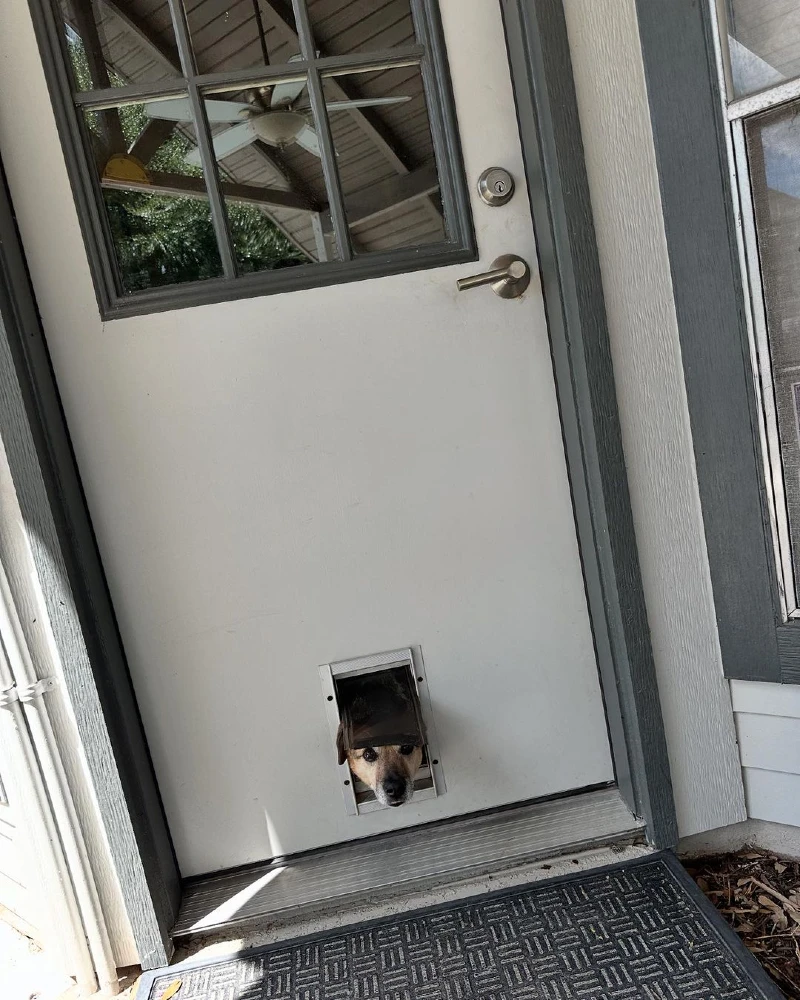
A clever little dog has its head poked through a small pet door at the bottom of a solid white exterior door. Above the dog door, the main door features a traditional window grid and a modern brushed nickel handle.
The scale of this door is perfect for a smaller pet and provides a secure feeling by not leaving a large gaping hole in the entryway. It works visually because the white frame of the pet door matches the trim of the house, creating a unified look.
The mood is one of watchful protection and sweet curiosity. It feels like a safe and secure home where the dog can keep an eye on the world while staying tucked away inside.
Small doors like this are excellent for keeping out larger unwanted animals while still letting your little guy explore.
Smart App Controlled High Tech Door
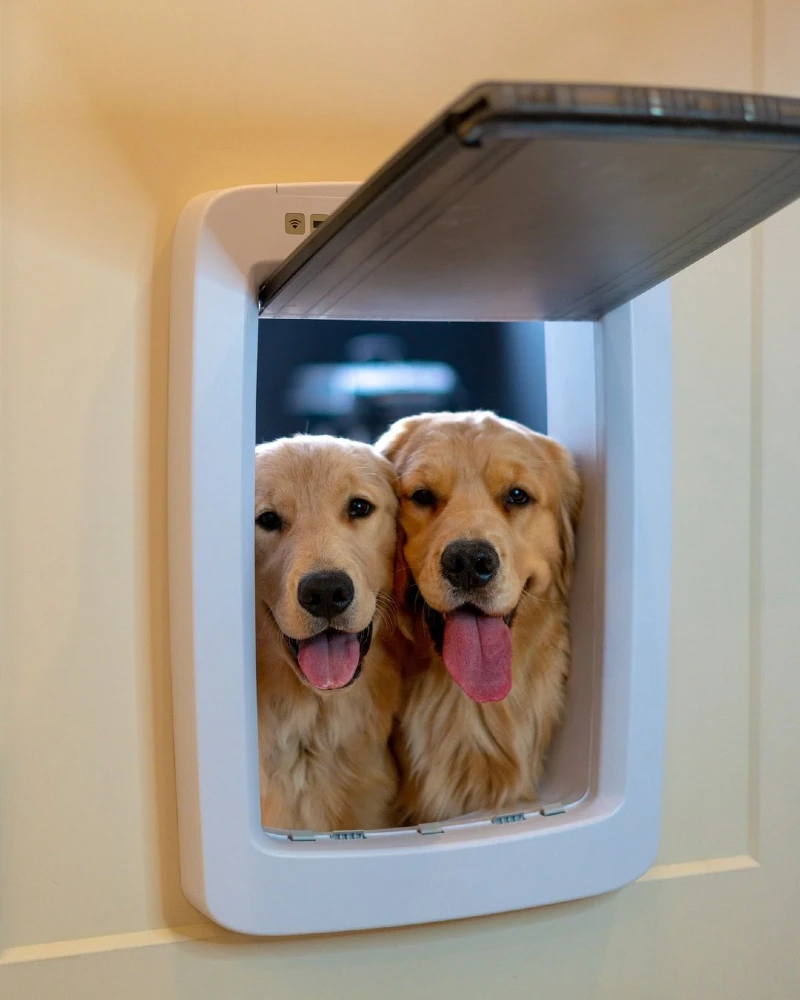
Two happy Golden Retrievers are framed by a sleek white electronic pet door that has a motorized flap lifted at the top. The unit is mounted into a neutral wall and features a small illuminated icon indicating it is connected to a smart system.
This is the ultimate choice for the tech-savvy pet parent because it allows for scheduled locking and tracking of your pet’s activity. The clean and minimal design of the white plastic housing looks very modern and fits perfectly into a contemporary interior.
The feeling here is one of total excitement and modern convenience. The dogs look thrilled with their “magic” door, and the owner gets the peace of mind that comes with high-tech security features.
Electronic doors are a lifesaver if you have a neighborhood cat or a stray raccoon that keeps trying to sneak into your kitchen.
Wall-Mounted Louvered Design
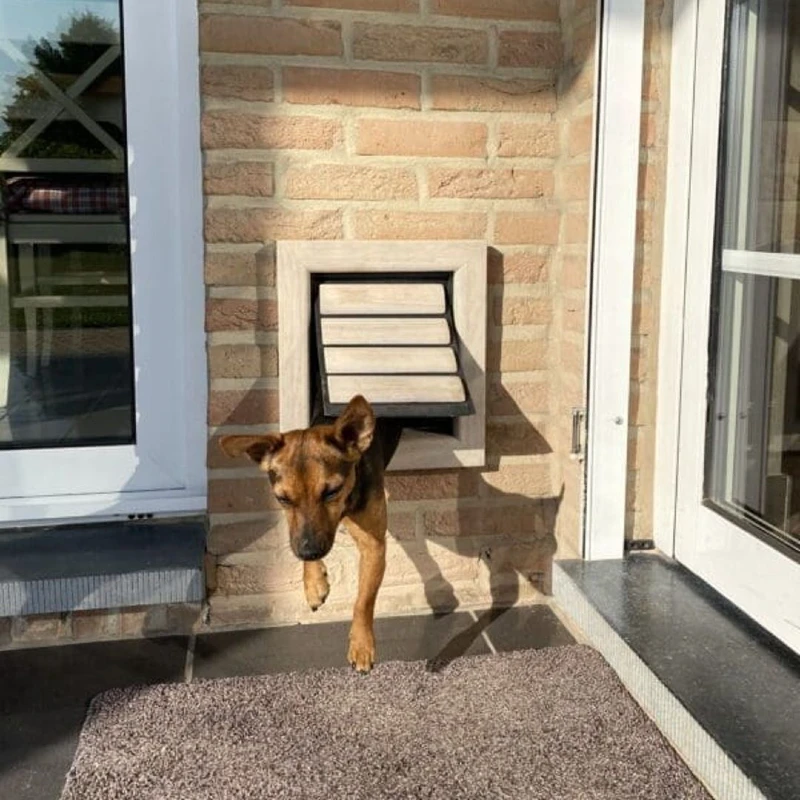
A small brown dog hops out of a pet door that is mounted directly into a light brick exterior wall rather than a door. The exit is covered by a series of wooden-look louvers that tilt outward, and it is surrounded by a thick tan-colored frame.
Installing through the wall is a brilliant way to keep your main doors free of modifications while utilizing unused wall space. The louvered design is particularly clever because it helps block direct wind and rain much more effectively than a single flat flap.
The mood is active and sun-drenched, with the dog caught in a moment of pure joy as it hits the patio. It feels like a custom-built solution for a home that values both utility and a tidy exterior appearance.
Wall installations require a bit more work with framing and insulation, but they are incredibly durable for long-term use.
Miniature Interior Sliding Barn Door
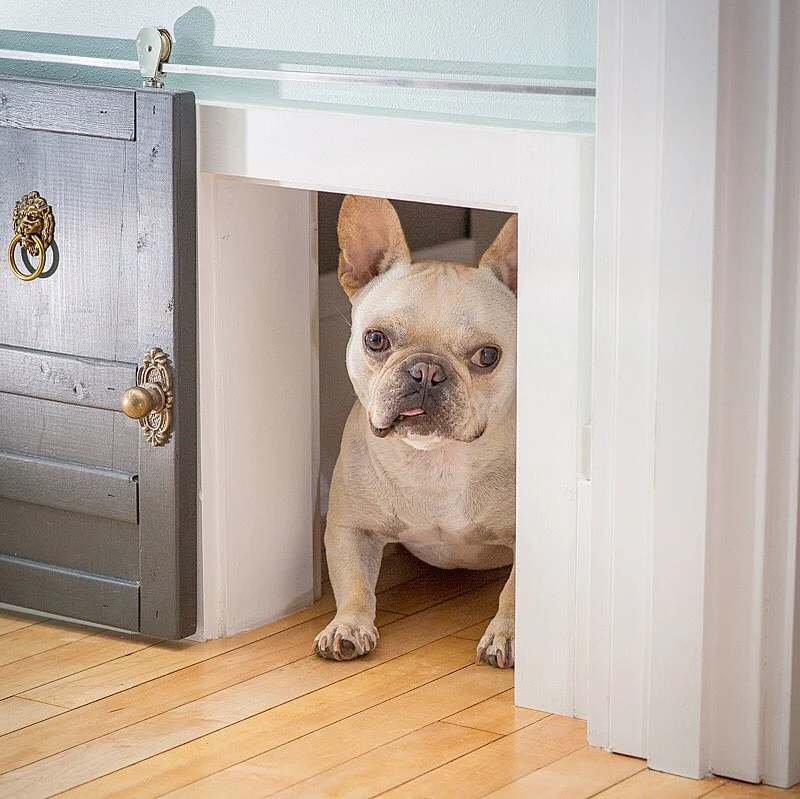
A French Bulldog peers through a small rectangular opening in a white wall that is flanked by a tiny dark grey sliding barn door. The miniature door is equipped with an ornate brass lion head knocker and a vintage-style handle, making it look like a piece of art.
This is a whimsical and charming way to manage pet movement between rooms, like a laundry area or a kitchen. The contrast between the crisp white trim and the dark wood of the mini door adds a lot of character and “Pinterest-worthy” detail to the hallway.
The energy is quirky and delightful, turning a simple pet pass-through into a conversation piece. It feels like a home where the owners have a great sense of humor and a deep love for their pet’s unique personality.
Interior doors like this are perfect for keeping the dog out of certain rooms at night without having to shut the main human-sized door.
Removable Sliding Glass Insert
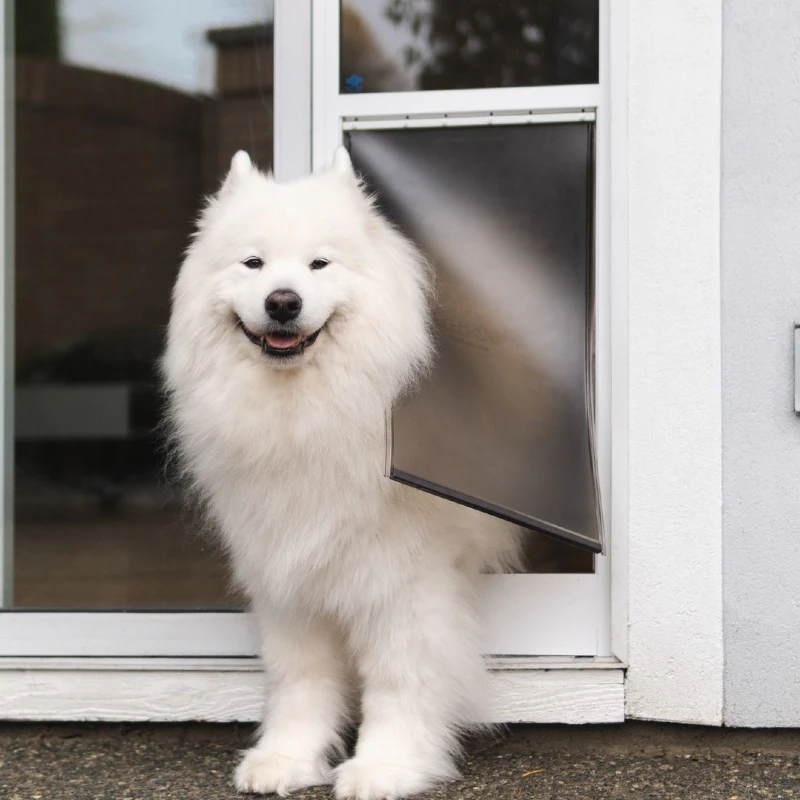
A majestic white Samoyed stands proudly next to a large, tinted, flexible flap that is part of a removable white frame insert for a sliding door. The flap is partially translucent, which provides a bit of privacy while still letting the dog see what is happening on the other side.
This design is fantastic for people who don’t want to commit to a permanent hole in their wall or door. The white frame blends effortlessly with the existing sliding door track, making it look like a built-in feature of the house.
The feeling is one of freedom and effortless living. The dog’s bright expression matches the clean and functional look of the door, creating a very positive and open atmosphere.
Tinted flaps are a great choice if your dog door faces the afternoon sun, as they help reduce glare and heat transfer into your living room.
Tips and Tricks That Make It Actually Work Long-Term
These are the things people wish they knew earlier.
Create a “landing zone” inside
Use a washable mat or rug right after the door
This catches 80% of dirt and water before it spreads
Angle matters more than you think
If possible, avoid placing it where wind hits directly
Side placement reduces noise and drafts
Use a double barrier approach if needed
Flap + curtain or flap + second mat helps in bad weather areas
Match the door to your dog’s personality
Nervous dogs prefer softer, lighter flaps
Confident dogs handle heavier, insulated ones easily
Keep it visible at first
Don’t hide it immediately
Let your dog clearly see and understand the exit
Make first use positive
Stand outside, call them, reward them
That first successful pass matters more than anything
Check seal after installation
Even small gaps = air leaks + bugs + dust
Seal properly once, avoid constant fixes later
Clean it regularly (not just the floor)
Flaps collect dirt and smell over time
A quick wipe weekly keeps it fresh and usable
Frequently Asked Questions
What Is The Best Type Of Dog Door For Small Spaces?
If your space is limited, look for slim and low-profile options like sliding glass door inserts or wall-mounted dog doors. These do not take up extra room and are easier to install without major changes. You can also consider compact flap designs that sit flush with the door to avoid bulk. The key is choosing something that fits your layout without making the area feel cramped or cluttered.
How Do I Choose The Right Size Dog Door?
Start by measuring your dog’s height and width, especially from the floor to their shoulders. The door should be slightly taller and wider than your pet to allow easy movement. Avoid going too large, as it can affect insulation and security. If you have a growing puppy, consider an adjustable option or size up slightly to avoid replacing it later.
Are Dog Doors Safe For Home Security?
Modern dog doors are designed with safety in mind. Many come with locking panels, reinforced frames, or electronic access that only opens for your pet. Choosing a high-quality door and installing it properly can reduce risks. If security is a concern, avoid placing it in hidden areas and consider options with smart features or sturdy covers for added protection.
Can Dog Doors Affect Insulation Or Energy Efficiency?
Yes, poorly installed or low-quality dog doors can let in drafts and impact your home’s temperature. To avoid this, choose insulated flaps, double-sealed designs, or energy-efficient models. Proper installation also plays a big role. A well-fitted dog door can maintain comfort inside your home while still giving your pet easy access outside.
Is It Better To Install A Dog Door In A Wall Or A Door?
Both options work, but it depends on your setup. Door installations are usually easier and more budget-friendly. Wall-mounted dog doors, on the other hand, offer more flexibility in placement and can look cleaner in some layouts. If you want a more permanent and seamless look, wall installation is often the better choice, especially for custom designs.
Conclusion
A dog door does not have to feel like a random add-on that disrupts your space. With the right idea, it can blend in naturally while making everyday life easier for both you and your pet.
Small adjustments, like choosing the right placement, size, or design, can completely change how functional and visually balanced your home feels.
Take a moment to think about your space, your dog’s habits, and what would actually make things easier day to day. The right choice will feel simple and intentional.
If you found these ideas helpful, share them with your friends and family who are also looking to upgrade their home for their pets.